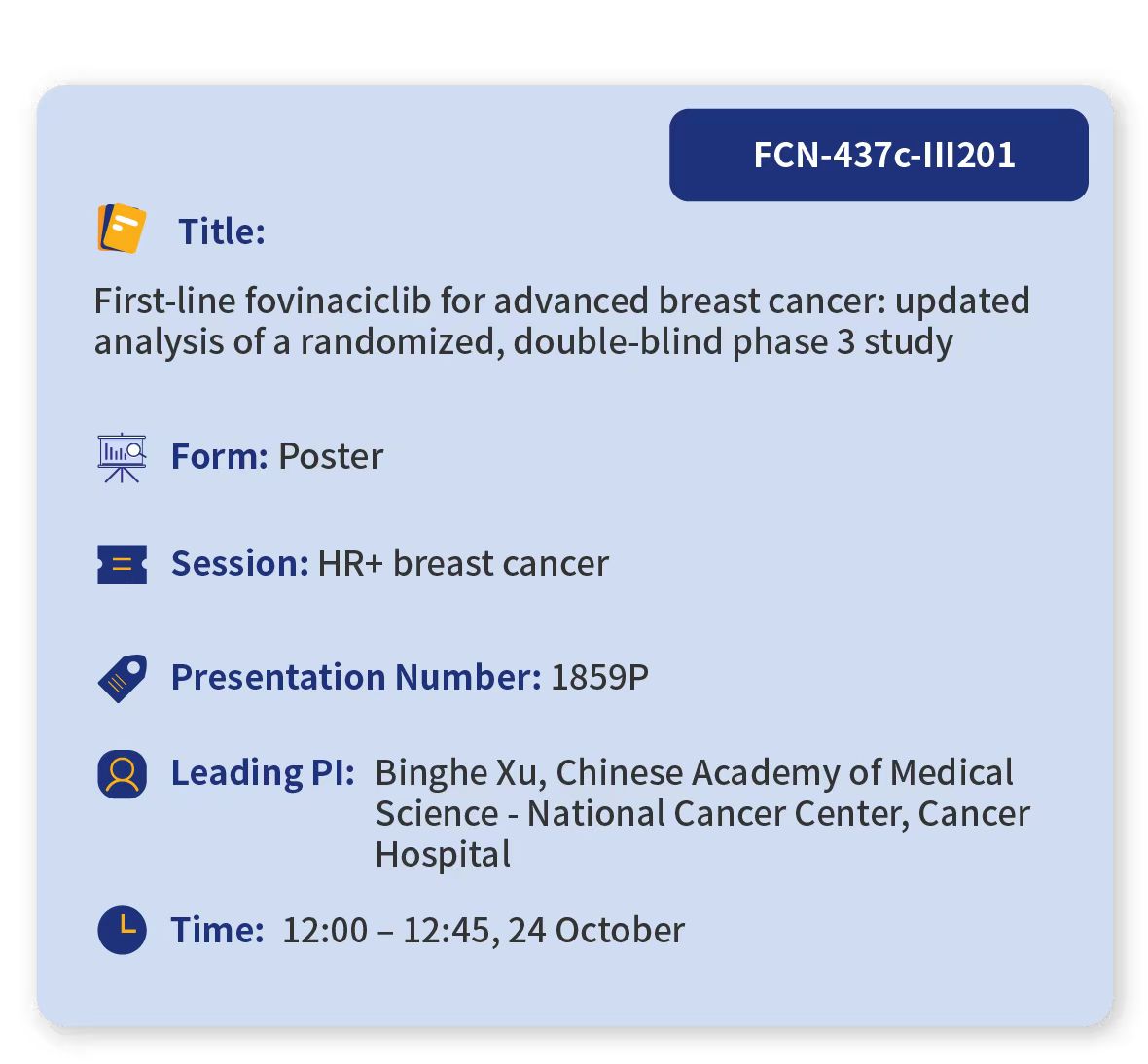

The 2026 European Society for Medical Oncology (ESMO) Congress will take place from October 23–27 in Madrid, Spain. At this year's meeting, Henlius will present 12 studies across three of its innovative products, including 2 rapid oral presentations and 10 posters. The data span three core tumor types — lung cancer (LC), breast cancer (BC), and gastrointestinal cancers (GC, EC, CRC, etc.) — as well as a broader range of solid tumors, highlighting the Company's efficient clinical translation and differentiated innovation. Among these, two data readouts are particularly noteworthy: the first disclosures from the U.S. bridging trial of anti-PD-1 mAb serplulimab (trade name in Europe: Hetronifly®), known as HLX10-005-SCLC301E (ASTRIDE study), and the Phase 2 proof-of-concept (POC) study of the PD-L1 ADC HLX43 in gastric cancer (HLX43-GC201).
The ASTRIDE study is a head-to-head clinical trial designed to compare the efficacy and safety of serplulimab plus chemotherapy versus atezolizumab plus chemotherapy in U.S. patients with ES-SCLC. The study is fully managed and executed by Henlius’ U.S. clinical and regulatory affairs teams across more than 100 oncology centres, representing one of the largest ES-SCLC clinical trials ever conducted in the U.S. with locally enrolled patients. Serplulimab is the only anti-PD-1 mAb currently conducting a bridging trial in the U.S. The first data readout from the ASTRIDE study will provide a critical assessment of serplulimab's clinical performance and safety profile specifically in the U.S. patient population.
Serplulimab: Global Differentiated Innovation with Deep Expertise in Lung and Gastrointestinal Cancers
World’s first anti-PD-1 mAb for 1L SCLC & first and only anti-PD-1 mAb for perioperative GC
Serplulimab is a recombinant humanized anti-PD-1 mAb injection (trade name: Hetronifly® in Europe). It is currently indicated for the treatment of squamous non-small cell lung cancer (sqNSCLC), extensive-stage small cell lung cancer (ES-SCLC), esophageal squamous cell carcinoma (ESCC), non-squamous non-small cell lung cancer (nsqNSCLC), and perioperative treatment of gastric cancer (GC). It is the world's first* anti-PD-1 mAb approved for first-line treatment of SCLC, and the world's first and only* anti-PD-1 mAb approved for perioperative treatment of gastric cancer. In addition, serplulimab has shown encouraging antitumor potential across multiple tumor types, such as limited-stage SCLC and colorectal cancer, warranting further clinical exploration. To date, serplulimab has been approved in over 50 countries and regions including China, the U.K., EU, and Southeast Asia, and has been included in reimbursement or public healthcare coverage systems in 10 countries, including Austria, Denmark, Germany, Ireland, Italy, Spain, and Sweden, thereby gaining access to mainstream healthcare systems in these markets. covering nearly half of the global population. Leveraging its unique mechanistic advantages, Henlius continues to advance the global clinical development of serplulimab across high-incidence cancers, including lung cancer and gastrointestinal malignancies, steadily building a differentiated global clinical value proposition across major high-burden cancers through its forward-looking clinical development strategy. Meanwhile, the company is simultaneously advancing bridging studies and regulatory filings in Japan and additional international markets, further strengthening the foundation for its global commercialisation strategy.
The compelling efficacy and clinical benefit of serplulimab have received broad international academic validation, with pivotal clinical studies of serplulimab having been published in leading journals including The Lancet, The Journal of the American Medical Association (JAMA), Nature Medicine, Cancer Cell, Lancet Respir Med, Cancer Communications, JAMA Oncology and Nature Communications. In addition, serplulimab has been included in several authoritative clinical guidelines, such as the CSCO Guidelines for SCLC, NSCLC, ESCC, GC, Clinical Application of Immune Checkpoint Inhibitors, and Chinese Guidelines for Radiotherapy in Esophageal Cancer, providing important references for oncology clinical practice.

HLX43: A Potential Best-in-Class PD-L1 ADC with Broad-Spectrum Anti-Tumor Activity and Immuno-Oncology Efficacy
HLX43 is a novel PD-L1-targeting ADC, composed of a fully humanized anti-PD-L1 IgG1 antibody, a novel tripeptide linker and topoisomerase inhibitor payload. The drug to antibody ratio (DAR) is around 8. Its mechanism of action integrates targeted cytotoxic delivery and immune checkpoint activation through PD-L1/PD-1 blockade. Upon binding to PD-L1-expressing tumour cells, HLX43's cytotoxic payload can be delivered into tumour cells via dual mechanisms—First, the ADC undergoes receptor-mediated endocytosis, releasing the cytotoxic payload intracellularly via linker cleavage, and the payload further diffuses into neighbouring tumour cells via bystander effect, thereby blocking DNA replication and triggering tumour cell apoptosis. Meanwhile, the anti-PD-L1 antibody of HLX43 activates immune modulation and blocks immune checkpoints, driving synergistic antitumor efficacy.
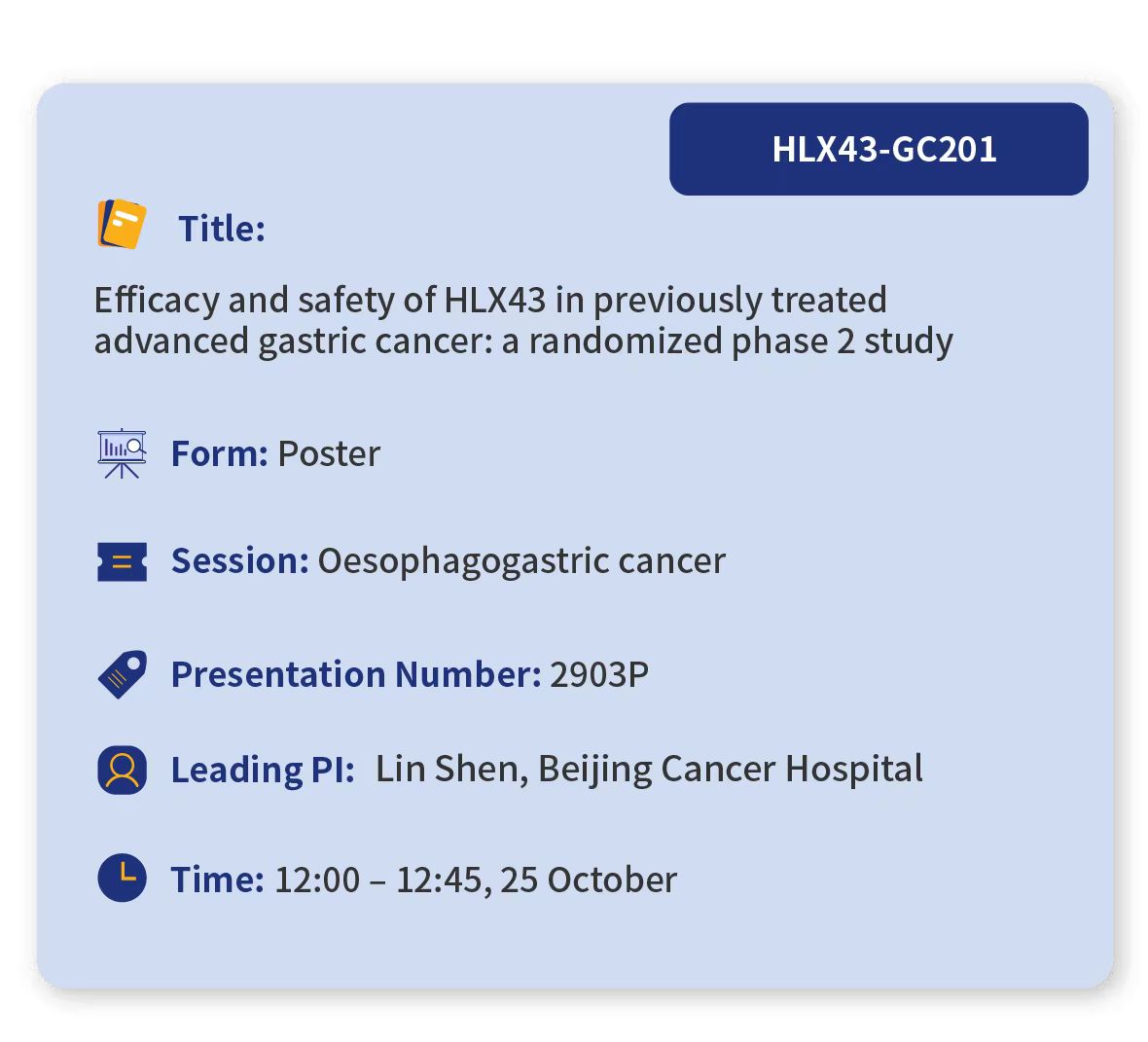
Early clinical data from its first-in-human study, along with multiple proof-of-concept results across solid tumours, have been presented at several international scientific conferences, including ASCO, WCLC etc., showing a favourable efficacy and safety profile. Notably, in non-small cell lung cancer (NSCLC), HLX43 has demonstrated activity without the need for biomarker-based patient selection, suggesting potential applicability across a broad patient population. In addition to NSCLC, encouraging signals have also been observed in gynaecological tumours, esophageal squamous cell carcinoma (ESCC), and other solid tumours. Beyond monotherapy, the Company is actively exploring combination strategies of HLX43 with anti-EGFR mAb pimurutamab and serplulimab, aiming to further expand its clinical potential. The forthcoming gastric cancer data readout represents the second pivotal milestone for HLX43 in GI tumors, underscoring its expanding therapeutic footprint in this indication.
Fovinaciclib: An Innovative CDK4/6 Inhibitor, Offering A New Therapy Option for Advanced HR+ patients